
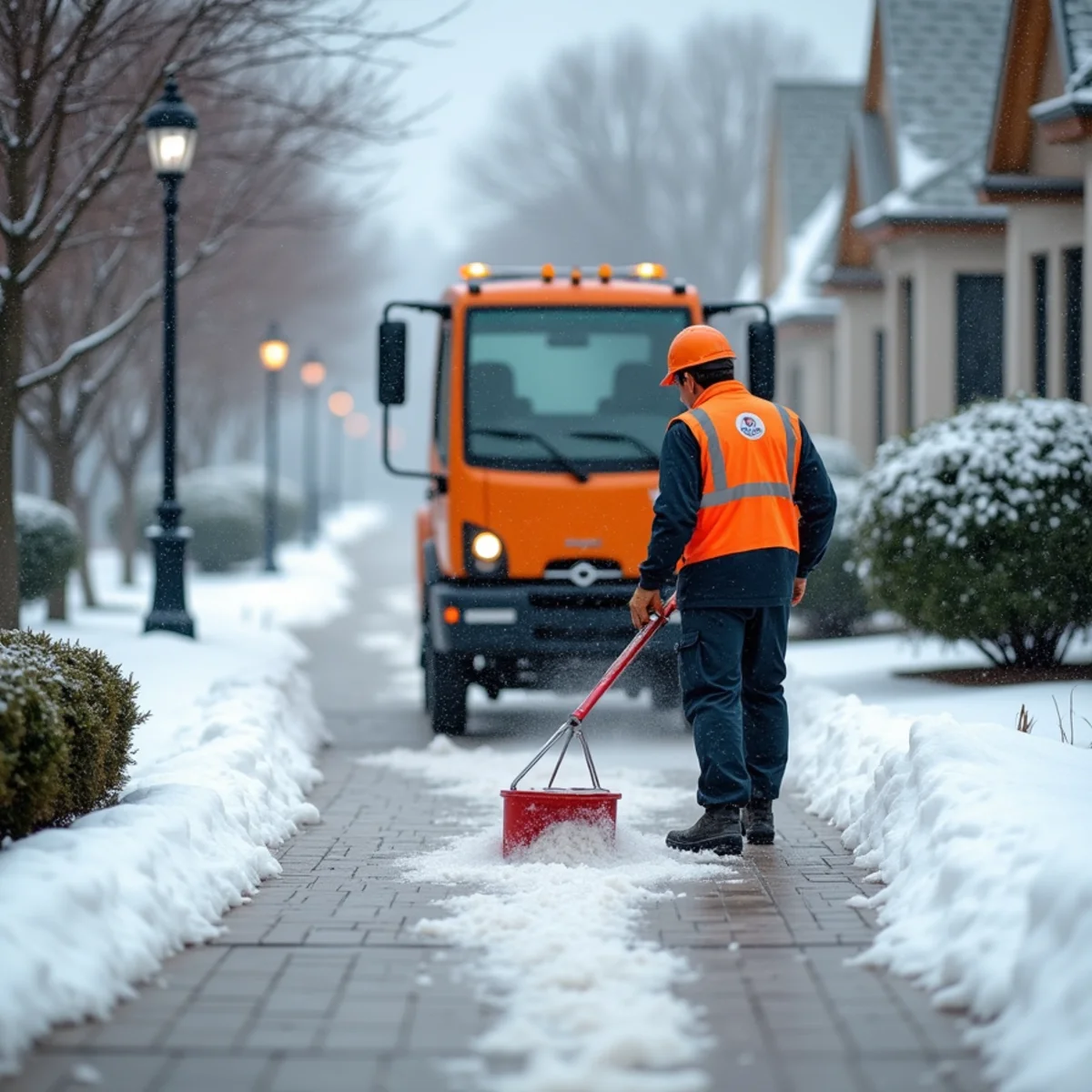
For a commercial property, winter is a liability season. Every icy walkway, parking lot, and entrance is a potential slip-and-fall claim, and those claims are among the most common and costly a business park faces. New Jersey winters bring exactly the conditions that cause them: repeated freeze-thaw cycles, refreezing meltwater, and storms that arrive overnight before employees and customers show up. A deliberate deicing strategy is not just about comfort; it is risk management, and it protects both the people on your property and the business behind it.
Why commercial deicing is a liability issue
Property owners and managers have a duty to keep their premises reasonably safe, and that duty extends to snow and ice. When someone falls on an untreated walk or a refrozen lot, the question becomes whether the property was maintained reasonably and whether that effort was documented. The stakes are high in high-traffic business parks where hundreds of people cross the pavement daily. A proactive, well-documented deicing program is the front line of defense against both injuries and the claims that follow them.
The freeze-thaw trap
Our zone 7a winters rarely stay simply frozen. Temperatures climb above freezing during the day and drop below at night, so snow melts and then refreezes into clear, hard ice, often overnight or in shaded areas that never see direct sun. That refrozen meltwater is especially dangerous because it is thin and hard to see. Black ice on a lot or walk that looked clear yesterday afternoon is a classic freeze-thaw hazard, which is why one plowing pass is never the whole job. Ongoing monitoring and treatment through a storm and its aftermath is what actually keeps a property safe.
Elements of an effective deicing program
- Pre-treating (anti-icing): applying deicer before a storm arrives so ice cannot bond to the pavement, making later removal faster and more effective
- Timely plowing and snow removal to clear accumulation before it compacts into ice under traffic
- Deicer application matched to conditions and temperature, since some products lose effectiveness in extreme cold
- Priority attention to high-risk zones: entrances, ADA-accessible routes, walkways, stairs, and shaded spots that refreeze
- Managing where plowed snow is piled so meltwater does not run across walks and refreeze
- Ongoing monitoring through freeze-thaw cycles, with return visits to re-treat refrozen surfaces
- Detailed record-keeping of every service, time, and material applied
Choosing and using deicers responsibly
Not all deicers behave the same. Rock salt, or sodium chloride, is economical but loses effectiveness as temperatures drop into the teens and below, while other products such as calcium chloride and magnesium chloride work at lower temperatures. Using the right product for the actual temperature matters for safety, because a deicer that has stopped working leaves ice behind. Application rate matters too: over-applying wastes material, damages concrete and vegetation, and, under EPA and NJDEP stormwater guidance, sends excess chloride into waterways. The professional standard is the right product at the right rate for the conditions, not simply piling on salt.
Protecting pavement and landscape
Aggressive or excessive deicing takes a toll on the property itself. Overuse of salt spalls and pits concrete over time, corrodes metal, and burns the turf and plantings along treated edges, leaving brown, dead margins by spring. A thoughtful program balances safety with material control: adequate treatment where people walk and drive, careful management near landscaped areas, and appropriate rates that protect both the pavement and the surrounding plantings you invested in. That balance is part of what separates a professional program from a truck that just dumps salt.
Where hazards concentrate
Not all pavement carries equal risk, and a smart program treats the highest-danger zones first and most often. Building entrances and doorways see constant traffic and collect tracked-in snowmelt that refreezes. ADA-accessible routes and handicap parking must stay clear both legally and for safety. Stairs and ramps are where a fall does the most harm. Shaded areas along the north sides of buildings and under canopies never get the sun that melts ice elsewhere, so they stay treacherous long after the open lot has cleared. Slopes and the low points where meltwater collects and refreezes round out the list. Mapping these zones for a property and prioritizing them in every service round is a core part of a defensible winter plan, because these are exactly the spots where claims originate.
Why response time is everything
Storms do not wait for business hours. Many hazards form overnight or in the early morning, and a property needs to be safe before employees and customers arrive, not after. That demands a contractor who monitors the weather, mobilizes ahead of storms, and responds around the clock. Our emergency snow plowing and deicing service operates 24/7 through the winter, pre-treating, plowing, and returning to address freeze-thaw refreezing, so your lot and walks stay safe and passable. Paired with our commercial landscaping maintenance, it gives property managers in Edison and South Brunswick a single, accountable partner for the whole year.
A slip-and-fall claim costs far more than a season of professional deicing. Protect the people on your property and the business behind it with a proactive, documented winter program. To set one up for your commercial property or business park, call The Blue Sky One LLC at (323) 606-0255. We provide 24/7 winter response and the record-keeping that keeps your property safe and defensible all season.
Ready to start? Talk to a local landscaping expert now.
(323) 606-0255Frequently Asked Questions
Pre-treating, or anti-icing, means applying deicer to pavement before a storm arrives so ice cannot bond firmly to the surface. That makes plowing and later ice removal faster and more effective, and it improves safety in the critical early hours of a storm. It is a core part of a professional commercial program and often prevents the dangerous ice-to-pavement bond that makes clearing so difficult.
Our winters swing above and below freezing, so snow and meltwater refreeze into hard, often invisible ice, especially overnight and in shaded areas. That is why a single plowing pass is never enough. An effective program monitors the property through freeze-thaw cycles and returns to re-treat refrozen surfaces, targeting entrances, walkways, and shaded spots where dangerous black ice tends to form.
Property owners have a duty to keep premises reasonably safe, and detailed service records show you met it. Logging every plowing and deicing visit with dates, times, conditions, and materials creates strong evidence that the property was maintained on schedule if a slip-and-fall claim arises. A reputable commercial contractor provides this documentation as a standard part of the service, not an extra.
Not necessarily. Rock salt loses effectiveness in the teens and below, so at very low temperatures piling on more of the wrong product still leaves ice behind. Over-application also damages concrete, corrodes metal, burns turf and plantings, and sends excess chloride into waterways against EPA and NJDEP guidance. The right product at the right rate for the actual temperature is both safer and more responsible.