
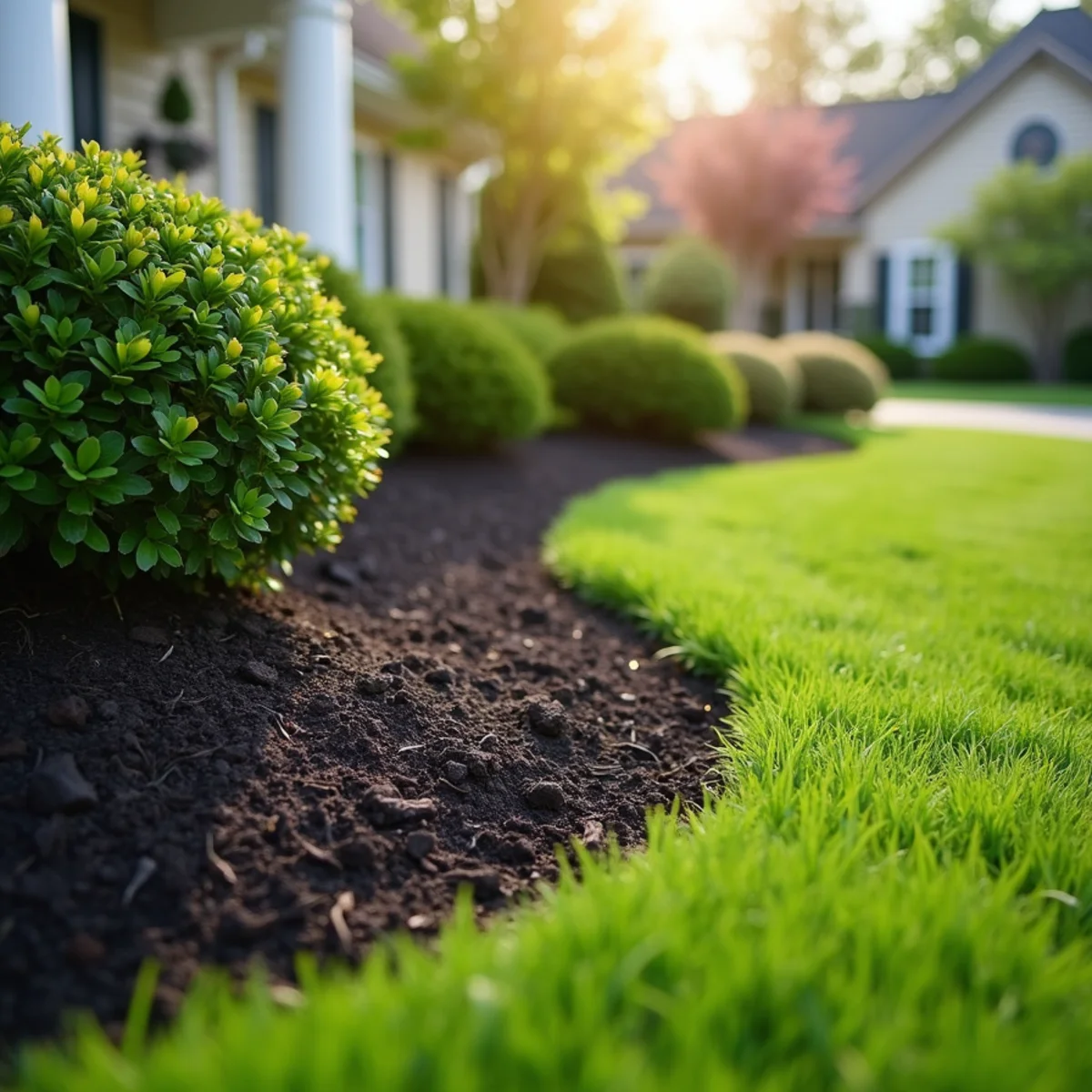
The Blue Sky One LLC handles mulch installation Freehold Borough NJ beds need to look finished and stay healthy — crisp-edged beds, the right mulch matched to your plantings, installed at the correct depth. We are a locally owned crew that weeds, cultivates and edges first, then keeps mulch pulled back from trunks to prevent rot.
Fresh mulch does more than make beds look finished. Applied at the correct depth, it suppresses weeds, holds moisture through Freehold’s hot, dry summer stretches, moderates soil temperature and slowly feeds the soil as it breaks down. Applied wrong — piled into volcanoes against trunks or laid so thick it sheds water — it does real harm. We install mulch the way it is supposed to work.
Every mulch job starts with the beds themselves: we cut crisp, defined edges, cultivate and clean out the old debris and weeds, and address anything the beds are telling us before the new mulch goes down. On acidic sandy-loam soil, mulch choice and depth matter, so we match the material to your plantings and conditions rather than dumping the cheapest bulk load available. The result is a landscape that reads as cared-for from the street and is genuinely healthier underneath.
We also handle ongoing bed care — seasonal refreshes, weeding, edging and light plant maintenance — so the beds we install do not slide back into a weedy mess by midsummer.
Bed and mulch problems we correct
- Weeds overtaking beds because old mulch thinned out or was never deep enough
- Faded, matted or washed-out mulch that makes the whole yard look tired
- Mulch piled against trunks (“volcano mulching”) that rots bark and invites pests
- Beds with no defined edge, letting grass creep in and lines blur
- Dry, compacted bed soil that sheds water instead of absorbing it
- The wrong mulch for the plantings or the acidic soil underneath
Need mulch & beds in Freehold Borough? We're ready to help.
(323) 606-0255Our Mulch & Beds Process
- 1
Bed prep & cleanup
We remove weeds and spent debris, cultivate compacted bed soil and clear the way for mulch to actually do its job.
- 2
Crisp edging
We cut a clean, defined edge along every bed so lines are sharp and turf can’t creep back in.
- 3
Right mulch, right depth
We select mulch suited to your plants and soil and install it at the correct depth — enough to suppress weeds and hold moisture, never so much it smothers.
- 4
Plant-safe finish
We keep mulch pulled back from trunks and crowns to prevent rot and pests, and tidy the transition to lawn and hardscape.
- 5
Cleanup & care plan
We blow off all surfaces, haul away debris, and can schedule seasonal refreshes and weeding so beds stay sharp.
Mulch & Beds Pricing in Monmouth County
Mulch and bed care is priced by bed square footage, mulch volume and how much prep the beds need. Planning notes for this market:
- Total bed square footage and the mulch depth required
- Mulch type selected (hardwood, dyed, natural, premium blends)
- Amount of weeding, cleanup and edging the beds need first
- Removal and disposal of old, matted or excess mulch
- Slope and access affecting how material is moved to the beds
- Add-on plant care, seasonal refreshes and ongoing bed maintenance
Free On-Site Assessment & a Written, Line-Item Estimate
Every mulch & beds project starts with a free on-site assessment of your Freehold Borough property, then a written estimate that separates each line — so a low bid can’t quietly leave out the work that matters. Your estimate spells out:
- Labor and materials
- Site preparation and, where needed, drainage
- Excavation and base work where the job calls for it
- Disposal and final cleanup
- Any permits or approvals required
- Maintenance responsibilities and warranty terms
Correct depth, every time
Enough mulch to smother weeds and hold moisture — never piled into trunk-rotting volcanoes.
Beds prepped first
We weed, cultivate and edge before mulching so the finish lasts, not just looks good for a week.
Matched to your soil
Mulch chosen for your plantings and Freehold’s acidic sandy loam, not the cheapest bulk pile.
Mulch & Beds Across Monmouth County & Central Jersey
Spring mulch refreshes book up fast across Freehold Borough, Freehold Township, Manalapan and Marlboro, where defined beds and fresh color set the tone for the whole growing season. We handle bed care and edging for Howell, Millstone, Colts Neck and Holmdel properties with extensive plantings, and match mulch type and depth to the acidic sandy-loam soil common throughout Monmouth County. Whether it is a few borough foundation beds or acres of estate planting, we prep before we mulch.
Frequently Asked Questions
Match mulch to your plantings, your soil and the maintenance you want. On Freehold’s acidic sandy-loam soil, a quality hardwood or natural mulch installed at the correct depth suppresses weeds and holds moisture while breaking down to feed the soil. We recommend a specific material after seeing your beds rather than defaulting to the cheapest bulk load.
Enough to suppress weeds and conserve moisture without smothering roots — generally a couple of inches, refreshed rather than endlessly piled on. Too little lets weeds through; too much sheds water and suffocates plants. We also keep mulch pulled back from trunks and crowns to prevent rot and pests.
Most Freehold beds benefit from an annual refresh, typically in spring, to restore depth, color and weed suppression after the previous year’s mulch has thinned and broken down. We can put your property on a seasonal schedule so the beds never slide into a weedy mid-summer mess.
Yes. Mulch is only as good as the bed under it, so we weed, cultivate and cut crisp edges before installing, and we offer ongoing bed care — weeding, edging and light plant maintenance — to keep everything sharp through the season.
It comes down to your total bed square footage and the depth required. As a rough guide, one cubic yard of mulch covers about 100 square feet at roughly three inches deep, and we measure your beds to order the right amount rather than guessing. Overordering wastes money and tempts over-piling; underordering leaves gaps where weeds break through.
Not always. If the old layer has broken down and thinned, we cultivate it and top-dress with fresh mulch to the correct depth. But when years of buildup have left beds two or three inches too deep — which sheds water and suffocates roots — we strip the excess first. Freehold beds against foundations especially benefit from a reset rather than endless piling.
Reviewed by Ezequiel De Los Reyes, Owner & Operator of The Blue Sky One LLC · Last updated September 2026