
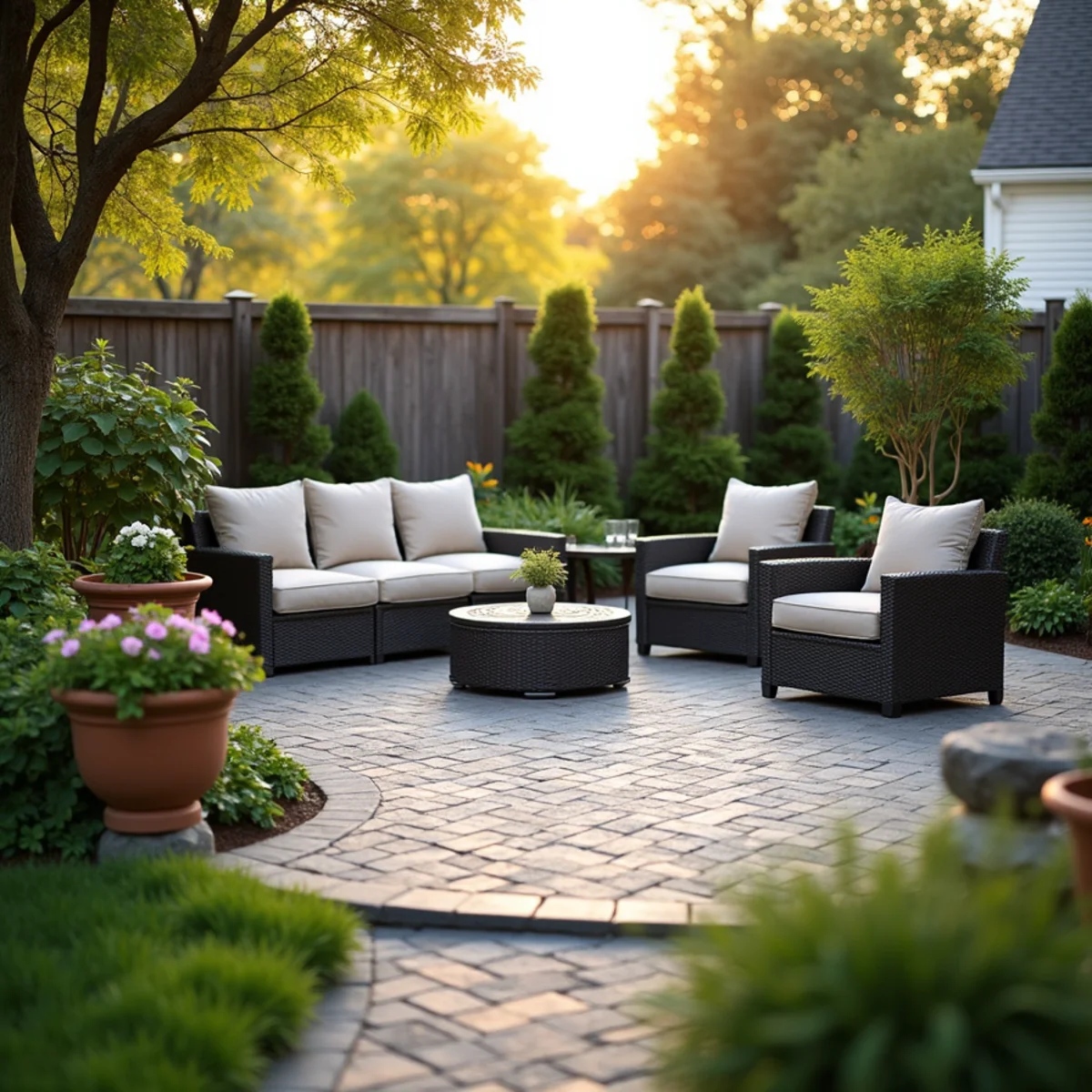
A paver patio is one of the highest-value improvements you can make to a Central New Jersey home, turning unused backyard into living space you actually enjoy. But the first question every homeowner asks is a fair one: what does it cost? The honest answer is that price varies widely, because a patio is not a commodity like a bag of mulch. What you pay depends on size, materials, site conditions, and the quality of what is buried under the pavers, which is the part that determines whether your investment lasts decades or fails in a few seasons.
The planning-range numbers
As a planning range, paver patio installation in our area typically runs about 15 to 35 dollars per square foot, and a full landscape design and installation project can range from roughly 5,000 to 25,000 dollars depending on scope. Those are wide bands on purpose. Where your specific project lands within them comes down to a handful of factors we will walk through, so you can understand what you are paying for rather than just reacting to a number on an estimate.
What actually drives the price
Size and layout
Square footage is the obvious factor, but shape matters too. A simple rectangle is efficient to lay, while curves, multiple levels, borders, and intricate patterns require more cutting, more labor, and more skilled layout time. A larger patio can sometimes cost less per square foot than a small one because setup and mobilization are spread over more area.
Paver material
There is a real range in paver products, from standard concrete pavers to premium and natural stone options. The material you choose affects both the per-unit price and the look, and it is one of the more visible places your budget shows up. During a landscape design and installation consultation, we help you match the material to both your aesthetic and your budget so you are not overpaying for a look you could achieve more affordably, or underspending on a surface that will not hold up.
Site conditions
This is where Central New Jersey specifics come in. Our soils are frequently acidic sandy loam with pockets of compacted clay, and clay is the enemy of a stable patio because it holds water and moves with freeze-thaw cycles. A site with heavy clay, poor drainage, or a slope requires more excavation, a deeper base, and sometimes drainage work, all of which add cost but are essential to a patio that stays flat. A site that needs tree removal, grade correction, or access for equipment through a tight yard also affects the number.
Where the money goes: the base is everything
If you remember one thing about paver patio cost, make it this: most of the value is underground. A properly built patio in our climate starts with excavation to the right depth, followed by a compacted aggregate base built up in lifts, a bedding layer, then the pavers, edge restraint, and joint sand. Zone 7a freeze-thaw cycles push and pull on everything through the winter, and only a correctly built, well-drained base resists that movement. When a patio sinks, spreads, or grows weeds through wide joints, the cause is almost always a base that was too thin, poorly compacted, or built on soil that was not properly prepared.
- Excavation to a depth appropriate for your soil and use, not a shortcut dig.
- A compacted crushed-stone base installed and tamped in layers for real stability.
- Proper drainage so water moves away rather than pooling under the surface.
- Correct edge restraint to keep the pavers from spreading over time.
- Polymeric or appropriate joint sand to lock the surface and limit weeds.
Getting an accurate estimate
Because so much depends on your specific site, a trustworthy estimate comes from a real visit, not a phone quote. When we look at a property in Colts Neck Township or Marlboro Township, we evaluate the soil, the grade, the drainage, and access, then talk through materials and layout so the number reflects your actual project. Our Paver Patio and Walkway Installation work is priced to include the base preparation that makes a patio last, which is why we encourage homeowners to compare bids on what is specified below the surface, not just the price at the bottom.
It is also worth thinking about the patio as part of a larger plan. Many homeowners find that combining the patio with surrounding beds, plantings, walkways, or a seating wall through a coordinated landscape design and installation project delivers a better result and often a better overall value than piecing it together over several years. Doing the site preparation once, for the whole project, avoids paying twice for excavation and equipment mobilization, and it ensures the drainage around the patio and the beds is planned together rather than fighting each other later.
If you are ready to turn a plan into a real number for your property, call The Blue Sky One LLC at (323) 606-0255. We have served Monmouth County since 2020, we are licensed and insured, and we will give you a clear, honest estimate for a paver patio built to last, backed by our satisfaction guarantee.
Ready to start? Talk to a local landscaping expert now.
(323) 606-0255Frequently Asked Questions
Because patios are not standardized. Differences in size, shape, paver material, and especially site conditions and base preparation move the price significantly. A low bid often reflects a thinner base or cheaper materials that shorten the patio's life. Compare what each estimate specifies below the surface, not just the total, to understand what you are really buying.
As a planning range, installation typically runs about 15 to 35 dollars per square foot in our area, and a broader landscape design project can range from roughly 5,000 to 25,000 dollars. Your actual figure depends on size, materials, soil, drainage, and access, so an on-site evaluation gives a far more accurate number than any online estimate.
The base is what keeps the patio flat through Central Jersey's freeze-thaw winters. Our clay-pocketed soils move with moisture and cold, and only a properly excavated, compacted, well-drained base resists that. Most sunken, heaved, or weedy patios failed because of an inadequate base, not the pavers, which is why cutting cost there is a false economy.
Absolutely, and it often makes sense. Combining a patio with surrounding beds, plantings, walkways, or a seating wall through a coordinated design usually produces a more cohesive result and can offer better overall value than adding pieces separately over several years. We can scope it as a single project or in planned phases to fit your budget.