
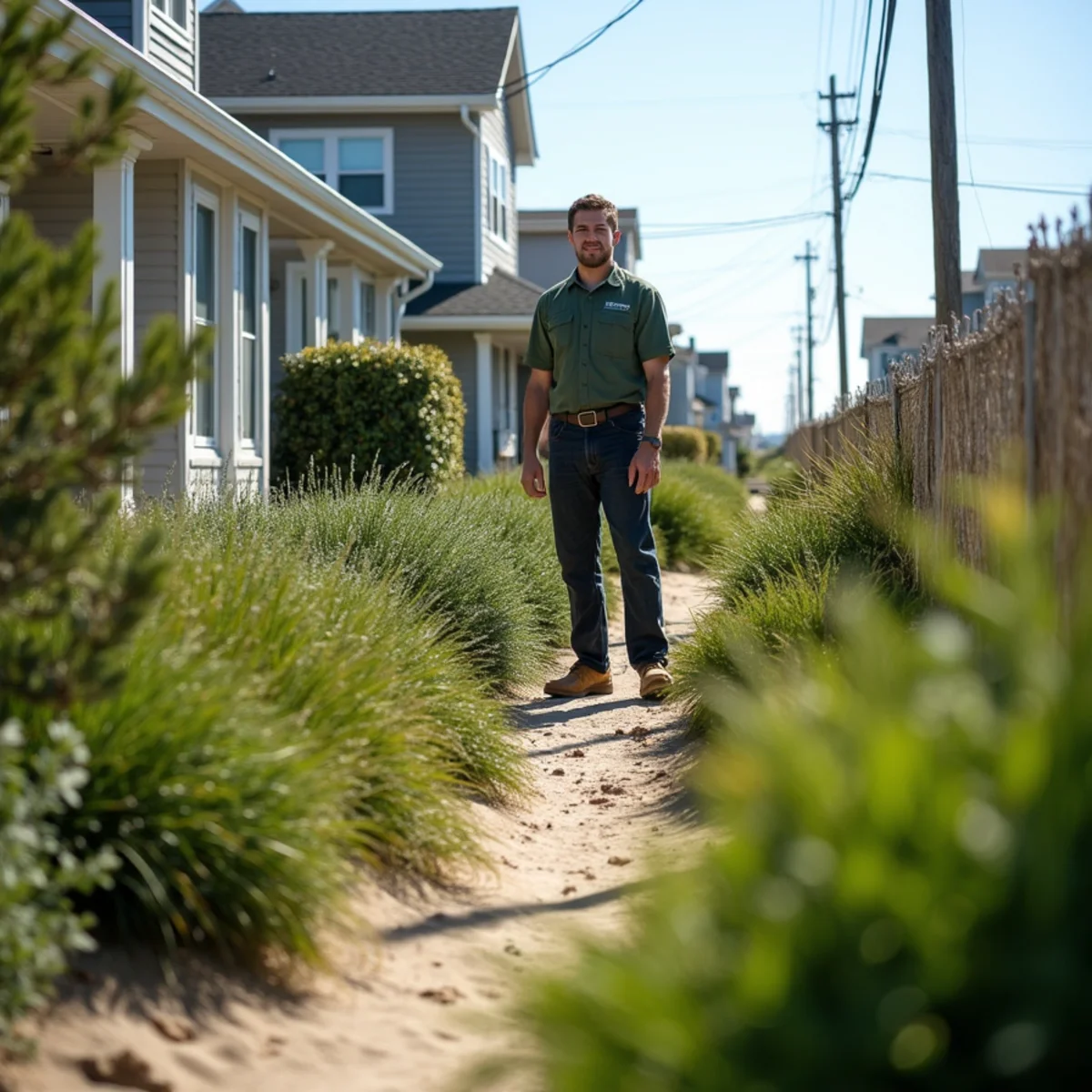
Landscaping near the water is a different discipline. Salt-laden wind burns tender foliage, sandy soil drains almost as fast as you can water it, and storms off the Atlantic push spray and sand well inland. Plants that flourish a few miles west will scorch and struggle on a shore lot. Success along the Monmouth County coast comes from choosing species built for these conditions and from designing hardscape and beds that shelter and support them.
What coastal plants are actually fighting
Three stresses define shore planting. First is salt, which arrives two ways: as airborne spray that coats and desiccates leaves, and as salt in the soil that pulls moisture away from roots. Second is the soil itself, typically fast-draining sand that holds little water or nutrition. Third is wind, which dries plants out, snaps weak stems, and sculpts anything not chosen for exposure. A plant that tolerates one of these but not the others will fail, so we select for the whole package.
Salt-tolerant plants that earn their place
Tough shrubs and grasses
The backbone of a shore landscape is durable, salt-resistant shrubs and grasses. These handle spray, wind, and sandy ground with minimal fuss once established.
- Bayberry (Northern bayberry): semi-evergreen native, thrives in sand and salt, excellent for informal screens
- Beach plum: native, salt-tolerant, produces fruit and spring bloom, ideal for dune-adjacent beds
- Rosa rugosa: exceptionally salt-hardy, fragrant blooms and rose hips, forms a dense hedge
- Little bluestem and switchgrass: native ornamental grasses that shrug off wind and drought
- Inkberry holly: a native evergreen holly that tolerates coastal exposure better than many broadleaf evergreens
- Russian sage and yarrow: perennials that bring color and stand up to sun, sand, and salt spray
Trees for exposed lots
Trees are trickier at the shore, but several perform. Eastern red cedar is a native evergreen that tolerates salt and wind and doubles as a windbreak. American holly handles coastal conditions and provides winter structure. For shade, honeylocust and certain oaks manage salt better than most. Site any tree so it can shelter the beds behind it, and give new trees extra water through their first two seasons while roots establish in fast-draining sand.
Building beds that hold water and nutrients
Pure beach sand drains too fast to sustain most plantings, so soil building is essential. Work generous compost and organic matter into planting areas to improve moisture and nutrient retention, and mulch beds to slow evaporation and moderate root temperature. Avoid over-fertilizing, which sandy soil simply flushes toward the water table, and instead feed lightly and more often. Because our coastal soils are also on the acidic side, a soil test guides any pH adjustment before you plant.
Hardscape that works with the coast
Thoughtful hardscape is a shore property's best friend. Permeable paver walkways and patios let rain soak in rather than sheet off sandy grade, and stone or paver courtyards create sheltered microclimates where less-hardy plants can thrive. Low seat walls and raised planters let you import better soil and lift roots above salt-heavy ground. When we handle residential hardscape design near Manasquan and Belmar, we position walls, fences, and paving to break wind and frame protected planting pockets, so the whole landscape holds up to the elements. Choose materials rated for freeze-thaw and salt exposure, because the same salt that stresses plants also degrades poor-quality masonry.
Designing in protective layers
The most resilient shore landscapes are built in tiers that step down in toughness from the water inward. The front line, closest to salt and wind, holds only the hardiest species: beach grass, bayberry, and Rosa rugosa that expect the abuse. Behind that first defense, in the wind shadow it creates, you can grow a broader palette of perennials and shrubs that would scorch in full exposure. Closer to the house, in courtyards and behind walls, the microclimate is mild enough for ornamentals that would never survive on the dune line. Thinking in layers rather than picking plants one at a time is what lets a coastal yard feel full and varied instead of sparse. It also spreads the wind and salt load so no single planting takes the full brunt.
Grouping plants with similar water and exposure needs also simplifies care and irrigation. A drought-tolerant native bed and a sheltered ornamental bed want very different watering, and separating them keeps you from overwatering one to satisfy the other. This zoning is a core part of how we lay out coastal designs, and it pays off in both plant health and lower maintenance over the years.
Maintenance rhythms for shore landscapes
Coastal plantings ask for a specific care routine. After major storms, a gentle freshwater rinse of foliage helps wash off accumulated salt spray before it burns leaves. Stake young plants against wind, prune to remove salt-damaged tips, and keep an eye on irrigation during dry, windy stretches when sandy beds parch quickly. A well-planned coastal landscape is not high-maintenance once established, but the first two seasons of attentive watering and protection make all the difference.
A shore landscape can be lush, colorful, and resilient when it is designed for its environment from the start. If you own a coastal property in Long Branch, Manasquan, or Belmar and want a landscape that stands up to salt, sand, and wind, call The Blue Sky One LLC at (323) 606-0255. We will design a planting and hardscape plan tailored to your exposure, so your yard thrives right up to the water's edge.
Ready to start? Talk to a local landscaping expert now.
(323) 606-0255Frequently Asked Questions
For maximum exposure, lean on natives and proven salt-lovers: bayberry, beach plum, Rosa rugosa, little bluestem, switchgrass, and inkberry holly all handle salt spray, wind, and sandy soil well. Eastern red cedar and American holly are dependable evergreens. Place the toughest species on the windward side and shelter less-hardy plants behind them for the best long-term results.
Work generous compost and organic matter into planting areas to boost moisture and nutrient retention, since pure sand drains too fast to sustain most plants. Mulch beds to slow evaporation, and feed lightly but more often rather than applying heavy fertilizer that sandy soil flushes away. A soil test helps you correct pH, which tends to run acidic near the coast.
Yes. Wind carries airborne salt spray well inland, especially during nor'easters and coastal storms, coating and desiccating foliage on plants that are not salt-tolerant. That is why a windward hedge or fence to break the spray is so valuable, and why rinsing foliage with fresh water after major storms helps protect sensitive plantings on exposed shore lots.
Choose pavers and stone rated for freeze-thaw and salt exposure, because low-quality masonry deteriorates quickly in a salt environment. Permeable paving helps rain soak into sandy grade, and walls, raised planters, and fences create sheltered microclimates and let you import better soil. Well-built hardscape both withstands the coast and protects the plantings around it.