
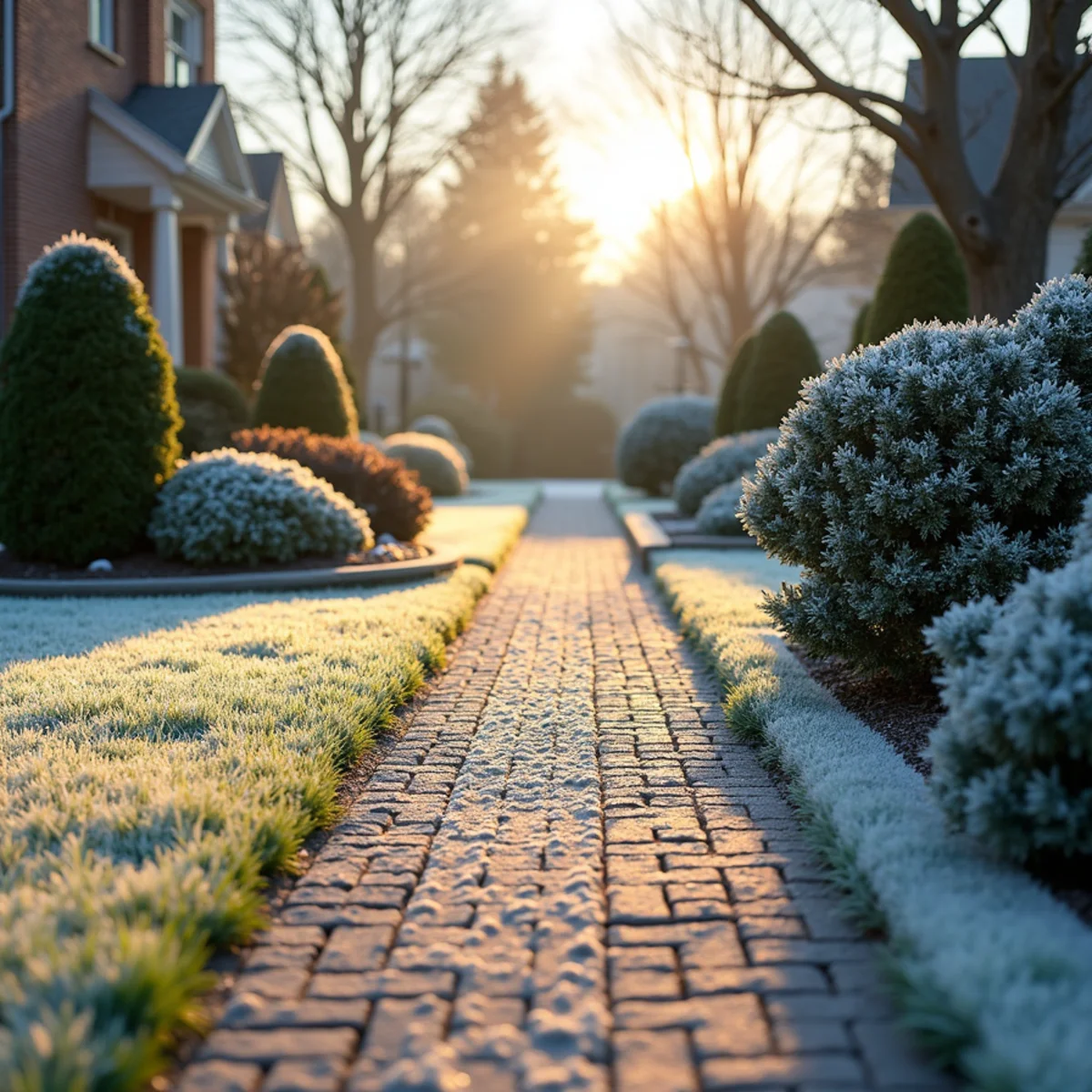
Winter damage in Central Jersey rarely comes from cold alone. It comes from the freeze-thaw cycle, the repeated swing between frozen and thawed ground that defines our zone 7a winters. Soil expands as it freezes and contracts as it thaws, and that constant movement heaves plants out of the ground, tears roots, and stresses turf. Understanding the cycle is the key to protecting your Freehold Borough landscape so it greens up strong rather than patchy in spring.
What freeze-thaw actually does
When wet soil freezes, the water in it expands into ice, lifting the surface. When it thaws, the ground drops back, but not always evenly. Repeat that dozens of times over a winter and several things go wrong: shallow-rooted perennials and new plantings get heaved partly out of the soil, exposing roots to drying air and cold. Turf crowns can lift and dry out. And saturated clay pockets heave hardest of all, cracking soil and damaging anything rooted in them. Coastal and inland Monmouth County both see this, and lawns installed or overseeded late in fall are especially vulnerable.
Protecting your lawn through winter
A lawn's winter survival is largely decided before the cold arrives, but there are things you can do all season. The goal is a lawn that enters dormancy healthy, stays undisturbed while frozen, and is not smothered or compacted.
- Keep the lawn free of heavy debris and leaf mats, which trap moisture and smother turf, inviting snow mold
- Avoid walking on frozen or frost-covered grass, which fractures the frozen blades and leaves footprint-shaped dead patches
- Mow to the proper final height in late fall, not too short, so the crown is protected but not so long that it mats
- Keep piled snow, especially plowed or shoveled snow carrying deicing salt, off your turf and beds
- Make sure the lawn drains; standing water that freezes does the most heaving damage
Guarding perennials and shrubs against heaving
For beds, a two-to-three-inch layer of mulch applied after the ground first freezes is the best defense against heaving. Counterintuitively, the point of winter mulch is not to keep the soil warm but to keep it consistently cold, so it does not repeatedly thaw and refreeze. That steady temperature prevents the heaving that ejects perennials from the ground. Check beds after hard freeze-thaw spells, and gently press any heaved plants back down. Wrapping or shielding broadleaf evergreens like rhododendrons on exposed, windy sites reduces winter desiccation.
Winter watering matters more than people think
Plants still lose moisture in winter, especially evergreens on sunny, windy days, and frozen soil cannot resupply roots. Going into winter well-watered, and watering during extended thaws when the ground is not frozen, helps woody plants and lawns endure. This is particularly important for anything planted the previous fall, whose roots have not yet spread far enough to be secure against heaving and drought.
Setting up now for a strong spring
Much of winter resilience is built in fall. A lawn aerated and overseeded early enough to establish, fed appropriately, and cleared of debris going into December is far better positioned than one neglected until snow flies. Our seasonal yard cleanups clear the leaf mats and debris that otherwise smother turf and harbor disease over winter, and our lawn care and maintenance programs time the final feeding and mowing to send the lawn into dormancy healthy. That fall preparation is what pays off when the ground starts moving in January and February.
Snow can help, salt cannot
It helps to know which winter weather actually threatens your lawn. A blanket of clean snow is an insulator, not an enemy; it moderates soil temperature and shields dormant turf and perennials from bitter wind and the worst of the freeze-thaw swings. The real damage comes from the extras that travel with winter maintenance. Piling plowed snow onto turf compacts it and delivers a concentrated dose of deicing salt as it melts, while foot and vehicle traffic across a frozen, snow-free lawn fractures the crowns. Manage where snow gets piled and where salt is applied, and much of winter's lawn damage simply never happens. This is one reason coordinating snow service with lawn care pays off: the crew that treats your walks knows to keep salt-laden snow off your beds.
What to do when spring arrives
Once the ground stabilizes, walk the property and assess. Press heaved perennials back, rake matted areas gently to let turf breathe, and hold off on heavy foot traffic while the ground is still soft and thawing so you do not compact it. Bare or salt-burned patches along walks and drives can be repaired with spot seeding or, where damage is extensive, fresh sod. A proper spring cleanup and assessment catches winter's damage early, before weeds colonize the thin spots.
Freeze-thaw damage is largely preventable with the right fall preparation and winter care. If you want your Freehold Borough or Englishtown landscape protected through the cold months and set up to rebound in spring, call The Blue Sky One LLC at (323) 606-0255. We will handle the cleanup, timing, and winter strategy so your lawn and beds come through the season strong.
Ready to start? Talk to a local landscaping expert now.
(323) 606-0255Frequently Asked Questions
Freeze-thaw is the repeated cycle of soil freezing and thawing through winter. Wet soil expands as it freezes and contracts as it thaws, and that movement heaves plants out of the ground, tears roots, and lifts turf crowns. Clay-heavy and poorly drained spots heave the most. Good drainage and a steady mulch layer are the best defenses against the damage.
Apply winter mulch after the ground has first frozen, not before. The goal is to keep the soil consistently cold so it does not repeatedly thaw and refreeze, which is what heaves perennials out of the ground. A two-to-three-inch layer works well. Mulching too early can trap warmth, delay dormancy, and attract rodents seeking shelter near plant crowns.
Yes. Walking on frozen or frost-covered grass fractures the frozen blades and crowns, which often shows up as footprint-shaped dead or brown patches in spring. Keep foot traffic off the lawn when it is frozen or frosted, and also while it is soft and thawing in early spring, when the ground compacts easily under weight.
That damage is almost always from deicing salt, either in plowed snow piled on the turf or in runoff from treated pavement. Salt pulls moisture from grass roots and leaves brown, dead margins along walks and drives. Use the minimum effective deicer near lawns, direct plowed snow away from planted areas, and reseed or sod the damaged strips in spring.