
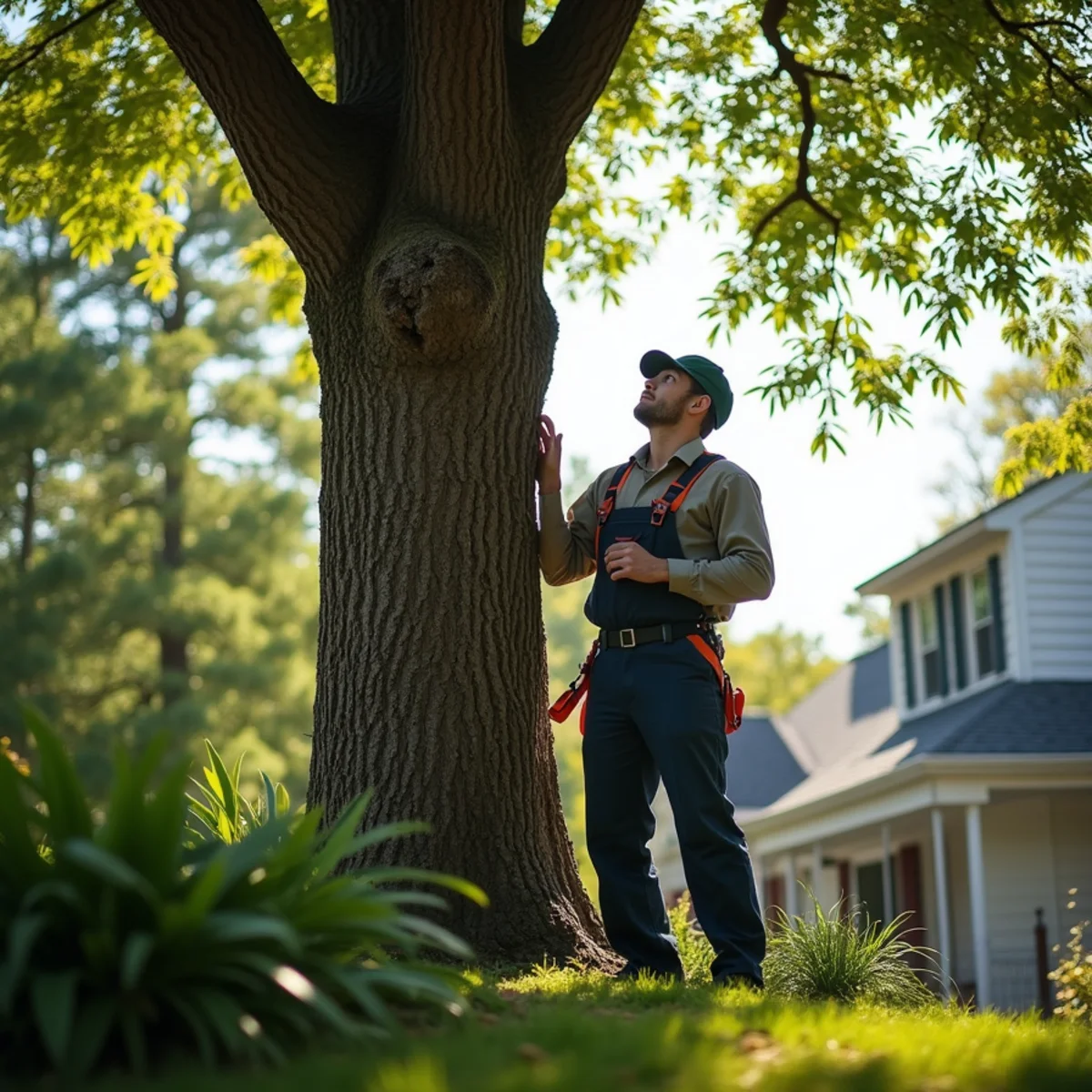
When a tree comes down in a nor'easter or a summer thunderstorm, it usually was not perfectly healthy the day before. Most storm failures are the final act of problems that were visible for months or years: dead limbs, cracks, decay, and compromised roots. New Jersey's exposure to hurricanes, tropical remnants, and violent thunderstorms makes a pre-season tree inspection one of the smartest things a Monmouth County homeowner can do. Catching a hazard early is far cheaper and safer than clearing a fallen tree off your roof.
Why proactive inspection pays off
Trees give warning signs. Wind does not typically topple a sound, well-rooted tree; it finds the weak points, the dead wood, the cracked union, the roots undermined by saturated soil. Our region's roughly 46 inches of annual rain softens ground and, combined with high winds, is a classic recipe for uprooting. A calm, dry-day inspection before storm season lets you spot and address these weaknesses on your schedule, rather than during an emergency in the dark and rain.
What to look for, from the ground up
The root zone and base
Start at the bottom, because root failure is the most catastrophic kind. Look for soil heaving or cracking on one side of the trunk, which can mean roots are lifting. Mushrooms or fungal conks at the base signal internal root or trunk decay. A trunk that enters the ground like a telephone pole, with no visible root flare, may have girdling roots or have been buried too deep. Recent construction, trenching, or grade changes near a tree often damage roots and show up as decline a season or two later.
The trunk and main unions
Move up the trunk. Deep vertical cracks, seams, and cavities indicate structural weakness. Pay close attention to where large limbs join the trunk: a tight, V-shaped union with bark pinched inside it, called included bark, is far weaker than an open, U-shaped union and is a common splitting point in storms. Bulges, soft or sunken areas, and peeling bark all warrant a closer look.
The canopy and limbs
- Dead branches with no leaves in season, or that snap dry, are ready to fall and should come out
- Hanging or partially broken limbs left from earlier storms are immediate hazards
- Cracks where limbs meet the trunk, especially on large, heavy branches over the house or driveway
- A lopsided or unbalanced canopy that puts excessive weight on one side
- Crossing or rubbing branches that create wounds and entry points for decay
Species and situations that raise the risk
Some trees fail more readily than others. Fast-growing species with brittle wood, such as silver maple, Bradford pear, and willow, are more prone to storm breakage. Shallow-rooted trees, and any tree recently exposed to wind after neighboring trees were removed, are also higher risk. Trees stressed by drought, disease, or recent construction damage lose structural integrity over time. Knowing which of your trees fall into these categories helps you focus your attention where it matters.
When to call a professional
A homeowner can spot many warning signs from the ground, but assessing internal decay, evaluating a large cracked union high in the canopy, or judging whether a leaning tree is a genuine threat calls for trained eyes and, for structural pruning of large trees, a certified arborist. Corrective work on big limbs over a structure is dangerous and is not a DIY ladder job. Where a tree or major limb is already compromised and threatening your home, that moves from routine care into hazard territory, and it is worth having assessed before wind makes the decision for you.
Timing your inspection to the season
The best time to inspect is twice a year, and each pass shows you something different. A late-winter or early-spring look, before the leaves come in, gives you a clear view of the branch structure, unions, and any cracks or dead limbs that the bare canopy makes obvious. A second look in full leaf reveals the opposite clues: sparse or off-color foliage, dead sections that fail to leaf out, and limbs sagging under summer weight. Scheduling your careful pre-storm inspection in late spring or early summer, ahead of the June-through-November window when tropical systems and their remnants reach New Jersey, leaves time to act on what you find before the wind arrives. A hazard you address in July on a calm day is a fraction of the cost and risk of one that fails in a September storm.
After the inspection: reduce your risk
Once you know what you are dealing with, act on it. Remove clearly dead and hanging limbs, clear the debris that accumulates under trees, and keep an eye on the trees you have flagged as marginal. When a storm does hit, our 24/7 emergency storm damage cleanup and emergency fallen tree and limb removal crews respond around the clock to clear downed trees and hazardous limbs safely. But the goal of a good pre-season inspection is to need that call less often, by dealing with hazards before the wind finds them. Homeowners across Monmouth County and Jackson who inspect proactively face far fewer storm surprises.
Hurricane season is not the time to discover your tree was hollow. Walk your property, flag the risks, and deal with the obvious hazards now. If a storm brings a tree or limb down on your property, The Blue Sky One LLC offers 24/7 emergency response. Call us any time at (323) 606-0255, and keep the number handy before the next storm rolls through.
Ready to start? Talk to a local landscaping expert now.
(323) 606-0255Frequently Asked Questions
Look for dead or hanging limbs, deep vertical trunk cracks, cavities, and fungal conks or mushrooms at the base that signal decay. Tight V-shaped limb unions with pinched bark split easily, and soil heaving or cracking near the trunk can mean root failure. A leaning tree over your house or driveway with any of these signs deserves professional evaluation before storm season.
Fast-growing, brittle-wood species like silver maple, Bradford pear, and willow break more readily in high wind. Shallow-rooted trees, trees recently exposed after neighbors were removed, and any tree stressed by drought, disease, or nearby construction are also higher risk. Our wet soils combined with strong nor'easter and thunderstorm winds make uprooting a real concern for compromised trees.
You can spot many warning signs from the ground, including dead limbs, trunk cracks, cavities, fungus at the base, and lean. What requires a professional is assessing internal decay, evaluating a large cracked union high in the canopy, or judging whether a leaning tree is a genuine threat. Structural pruning of large limbs over a structure is dangerous and should not be a DIY ladder job.
Stay clear of the tree, and never approach one touching or near power lines; treat every downed line as live and call your utility. Keep people and pets away from unstable limbs and leaning trunks. Then call a professional crew with the right equipment. The Blue Sky One LLC provides 24/7 emergency storm and tree removal response at (323) 606-0255 to clear hazards safely.