
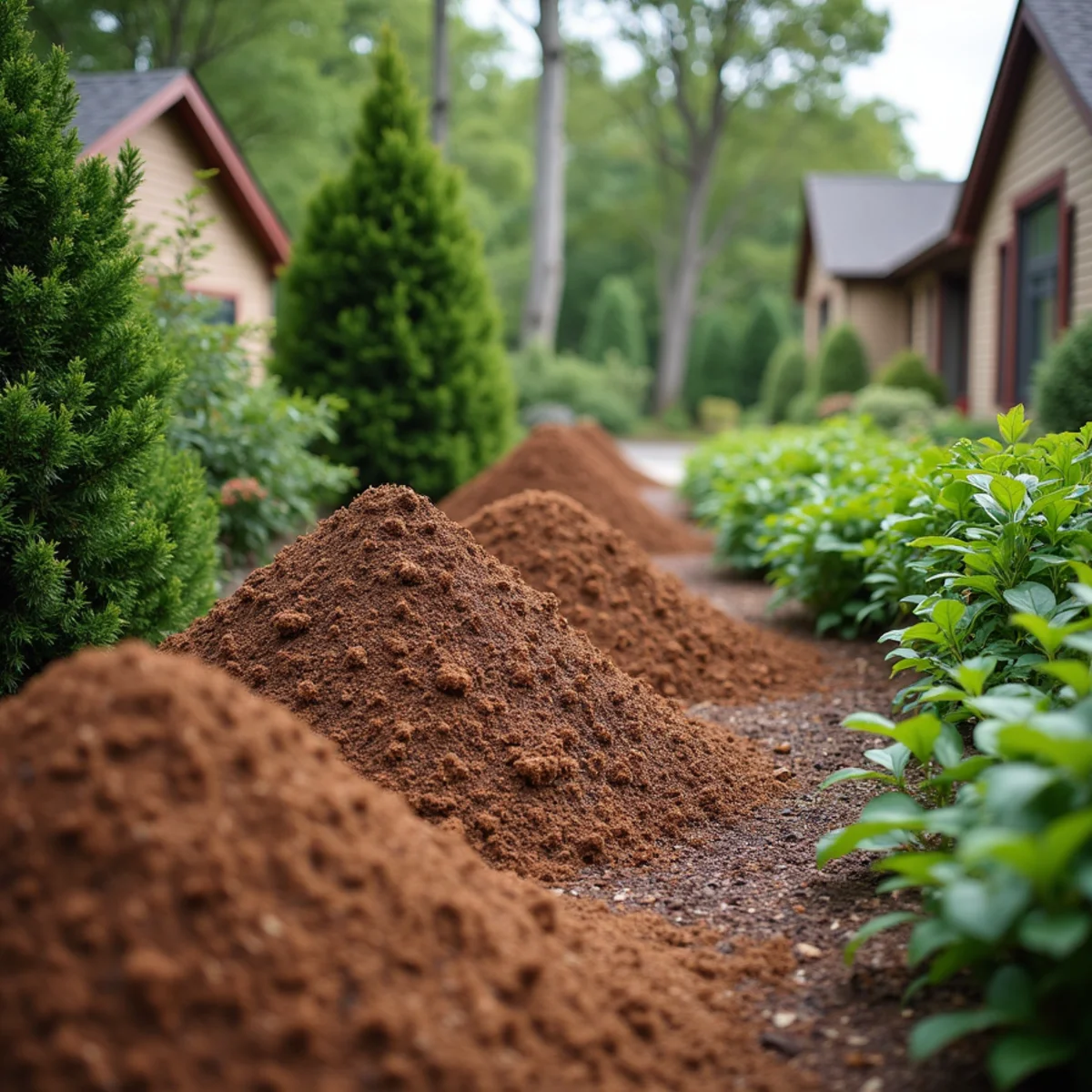
Mulch does more than tidy up a bed. In Monmouth County, where soils lean acidic and swing between sandy loam and pockets of compacted clay, the right mulch moderates soil temperature, holds moisture through July droughts, suppresses weeds, and slowly feeds the ground as it breaks down. The wrong mulch, or the right mulch applied badly, starves roots of oxygen and invites disease. This guide walks through the choices we actually recommend to homeowners across Colts Neck and Rumson.
Why mulch matters more in Central Jersey soil
Our regional soils typically test on the acidic side, often between pH 5.0 and 6.0, and the sandy fractions drain fast while clay pockets hold water and compact. That combination stresses ornamentals. A two-to-three-inch layer of organic mulch buffers both extremes: it slows evaporation from sandy ground and shields clay from crusting after our roughly 46 inches of annual rain. As bark mulch decomposes, it also adds organic matter that improves structure over several seasons, which is exactly what tired beds need.
Organic mulch options ranked for our beds
Shredded hardwood bark
Shredded hardwood is the workhorse for most Monmouth County landscapes. It knits together on slopes so it resists washing during thunderstorms, breaks down at a moderate pace, and returns nutrients to the soil. It does trend slightly toward neutral as it ages, which suits the acid-loving natives and most perennials we plant. Expect to refresh it annually because it decomposes faster than bark nuggets.
Pine bark nuggets and pine fines
Pine bark is mildly acidic, so it is a smart match for azaleas, rhododendrons, hollies, blueberries, and other ericaceous plants that thrive in our low-pH ground. Larger nuggets last longer but float and scatter in heavy rain, so we reserve them for flat beds. Pine fines are excellent as a soil conditioner tilled into new planting areas.
Cedar and dyed mulches
Cedar resists decay and carries a natural aroma some homeowners like, but it breaks down slowly and adds little organic matter. Dyed mulches hold color longer for a manicured look; choose a reputable product because low-grade dyed mulch is sometimes made from ground construction debris. If appearance near a new patio matters most, dyed hardwood is a reasonable pick.
- Shredded hardwood: best all-around, grips slopes, moderate breakdown
- Pine bark: mildly acidic, ideal for azaleas, hollies, and blueberries
- Cedar: long-lasting and aromatic but low nutritional value
- Leaf mold or compost: outstanding soil builder, best as a thin base layer under a decorative top mulch
When stone or inorganic mulch makes sense
Crushed stone and river rock never decompose, so they suit foundation drainage strips, dry creek beds, and high-heat spots against south-facing walls. The trade-off is that stone stores and radiates heat, offers no nutrients, and lets weeds seed in the dust that collects between rocks. We steer homeowners away from stone over the root zones of trees and shrubs that prefer cooler, richer soil. Where drainage is the real problem, correcting grade or adding a proper subsurface solution beats piling on stone.
How much, how deep, and how often
Depth is where most well-meaning homeowners go wrong. Two to three inches is the sweet spot for organic mulch. Thinner than that fails to block light and weeds break through; thicker than that and rainwater sheds off the surface while roots below suffocate in low oxygen. Before adding fresh mulch, rake and fluff last year's layer rather than burying it, and only top off enough to reach the target depth. A cubic yard covers roughly 100 square feet at three inches, which helps when you estimate a delivery.
- Edge the bed cleanly and pull existing weeds by the root
- Loosen and level any matted, crusted old mulch
- Water beds if the soil is dry before you spread
- Spread evenly to two to three inches, keeping material off stems and trunks
- Pull mulch back to expose the root flare of every tree and shrub
Matching mulch to your planting plan
Mulch choice should follow your design, not fight it. When our crews handle a full landscape design and installation, we specify pine bark in the ericaceous beds, shredded hardwood along mixed borders, and stone only where drainage or fire clearance demands it. Coordinating mulch with the plant palette from the start keeps maintenance simple and beds healthy. If your beds are already in place, our mulch installation and bed care service refreshes edging, weeds, and material on a seasonal rhythm so the landscape looks intentional all year in neighborhoods like Rumson.
Timing your mulch in Monmouth County
Mid-to-late spring, once the soil has warmed but before summer heat sets in, is the prime window. Mulching too early over cold, wet ground can delay soil warming and slow root activity. A light fall touch-up helps insulate perennials and new plantings through our freeze-thaw winters. Avoid the temptation to mulch heavily in fall over crowns of tender plants, which can encourage rodents and rot.
Common mulching mistakes we fix
A few recurring errors undo all the benefits mulch should provide. The volcano is the most damaging, but over-application is a close second: homeowners who add a fresh three-inch layer every year without disturbing the old build a suffocating six-to-eight-inch cap that sheds water and rots roots. Landscape fabric under organic mulch is another false economy, because the mulch decomposes into soil on top of the fabric and weeds root right through it, while the fabric blocks the beneficial exchange between mulch and ground. Finally, mulching right up against the foundation or over the crowns of perennials traps moisture where you least want it. Correcting these is often as valuable as the mulch itself.
Choosing and placing mulch well is one of the highest-return, lowest-cost things you can do for a landscape. If you would rather have it measured, delivered, and installed correctly the first time, call The Blue Sky One LLC at (323) 606-0255. We will assess your beds, recommend the right material for your soil and plants, and keep your Monmouth County landscape looking sharp season after season.
Ready to start? Talk to a local landscaping expert now.
(323) 606-0255Frequently Asked Questions
Two to three inches is ideal for organic mulch in our area. Less than that fails to suppress weeds or hold moisture, while more than three inches sheds rainwater and starves roots of oxygen. Rake and fluff existing mulch before topping off, rather than simply adding a fresh layer on top every year.
Most organic mulches have only a minor, gradual effect on pH as they decompose. Pine bark is mildly acidic and complements acid-loving plants like azaleas and hollies, while hardwood trends closer to neutral over time. If pH is a real concern, a Rutgers Cooperative Extension soil test gives you an accurate baseline before you adjust anything.
Reputable dyed mulch made from clean hardwood is fine for ornamental beds, and the colorants used are generally iron- or carbon-based. The caution is with cheap products that may be ground from treated construction debris. Buy from a trusted supplier, and avoid dyed mulch in vegetable gardens where you prefer natural, food-safe organic material.
Mid-to-late spring is the primary window, after the soil has warmed but before summer heat arrives. A light refresh in fall helps insulate perennials through freeze-thaw cycles. Avoid mulching heavily over cold, saturated ground in early spring, since that can slow soil warming and delay root activity in your beds.