
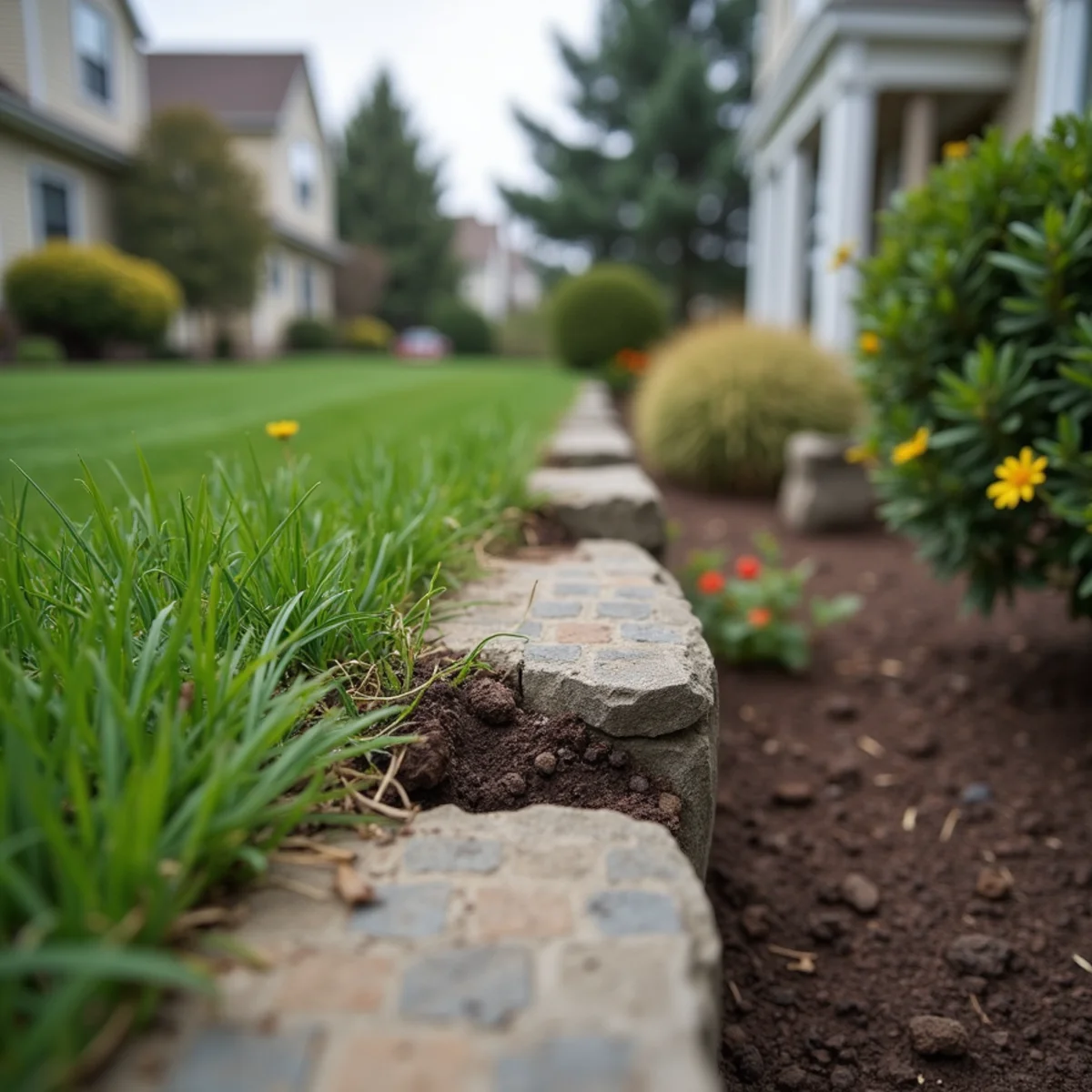
A retaining wall has one job: to hold back soil and the water within it. When it starts to lean, bulge, or crack, it is telling you that job is being lost, and the process almost never reverses on its own. A tilting wall is not a cosmetic annoyance to live with; it is a structure under stress that will eventually fail, sometimes gradually and sometimes suddenly. Understanding why walls fail helps you catch the problem early and make the right repair decision instead of a costly patch that buys only a season.
The real enemy is water, not soil
Homeowners assume a retaining wall fails because the soil behind it is too heavy. The soil is part of it, but the true culprit in most failures is water. When soil behind a wall gets saturated, its weight increases dramatically and it exerts far more pressure, called hydrostatic pressure, against the back of the wall. In Central New Jersey, with roughly 46 inches of rain a year and pockets of compacted clay that hold water rather than draining it, this pressure builds up behind walls constantly. A wall built without proper drainage is essentially a dam holding back waterlogged earth, and it is only a matter of time before that pressure wins.
How to read the warning signs
Walls rarely fail without warning. They tell you they are in trouble months or years ahead of a collapse, if you know what to look for. Walk your walls after heavy rains and watch for these signals.
- Leaning or tilting away from the soil it retains, especially if it has changed since you last noticed.
- A bulge or belly in the face of the wall, where a section is pushing outward more than the rest.
- Cracking, separating blocks, or gaps opening at the joints or ends.
- Soil, mulch, or water washing out from behind or beneath the wall.
- Standing water or constant sogginess at the base, or the wall face staying wet long after rain.
Why you shouldn't wait
A wall that has begun to move is under active stress, and each freeze-thaw cycle and each heavy rain in our Zone 7a climate adds to it. Caught early, a failing wall can sometimes be addressed before it comes down, which is far cheaper and safer than dealing with a collapse that takes your slope, plantings, or hardscape with it. A leaning wall near a walkway, driveway, or structure is also a genuine safety hazard.
What causes the failure in the first place
When we evaluate a failing wall in Marlboro Township or Atlantic Highlands, the causes usually trace back to how it was originally built. The most common are inadequate or absent drainage behind the wall, a foundation or base that was not built deep or stable enough, no proper backfill with free-draining stone, missing or insufficient reinforcement for the height of the wall, and no batter or setback to lean the wall into the slope. Frost heave in our freeze-thaw winters magnifies every one of these weaknesses. A wall that skipped these fundamentals may stand for a few years and then begin to move as water and frost do their work.
What real repair involves
Here is the hard truth many homeowners do not want to hear: a wall that is genuinely failing usually cannot be permanently fixed by pushing it back or facing it. If the underlying cause is missing drainage or a bad base, the durable solution is to rebuild it correctly. Our Retaining Wall Construction approach starts by diagnosing why the existing wall failed, then rebuilding with the elements the original lacked: a properly excavated and compacted base, free-draining gravel backfill, a drainage system to relieve water pressure, appropriate reinforcement for the height, and the correct setback so the wall works with gravity instead of against it.
Because water is the root cause, drainage is central to every rebuild. In many cases we integrate our French Drain and Yard Water Solutions work directly into the repair, capturing and carrying away the water that saturates the soil behind the wall before it can build pressure. Solving the wall and the water together is what turns a repair into a permanent fix rather than a delay of the next failure.
When repair versus rebuild makes sense
Not every wall needs a full rebuild. A short wall with minor movement and good drainage may be repairable, and small cosmetic cracks in a stable wall are not urgent. But once a wall is leaning, bulging, or actively shedding soil, patching the visible symptom without addressing drainage and structure is money spent to postpone the inevitable. An honest evaluation of the specific wall, its height, its condition, and its drainage is the only way to know which path is right, and it is the first thing we do.
If your retaining wall is leaning, bulging, or cracking, do not wait for it to come down. The Blue Sky One LLC has built and repaired walls across Monmouth County since 2020, we are licensed and insured, and we solve the drainage cause, not just the visible symptom. Call (323) 606-0255 for an honest evaluation, backed by our satisfaction guarantee.
Ready to start? Talk to a local landscaping expert now.
(323) 606-0255Frequently Asked Questions
Almost always because of water pressure behind it. When soil behind the wall saturates, it becomes much heavier and pushes hard against the wall, especially in our clay-holding soils with heavy annual rain. A wall built without proper drainage cannot relieve that pressure, so it gradually tilts, bulges, and eventually fails. Inadequate base or reinforcement makes it worse.
Rarely as a permanent fix. If the wall is moving because of missing drainage or a poor base, pushing it back or facing it does not address the cause, so it moves again. A genuinely failing wall usually needs to be rebuilt with proper drainage, backfill, base, and reinforcement. An evaluation determines whether a specific wall is repairable or needs rebuilding.
Serious. A bulge means a section is under stress it was not built to handle and is a strong warning of impending failure. A collapse can take your slope, plantings, and nearby hardscape with it, and a leaning wall near a walkway or driveway is a safety hazard. Address a bulging wall promptly rather than waiting for it to come down.
Most meaningful repairs do, because water pressure is the leading cause of failure in our climate. Solving the wall without solving the water usually just delays the next failure. We commonly integrate French drain work into wall repairs to capture and carry away the water saturating the soil behind the wall, which is what makes the fix last rather than recur.