
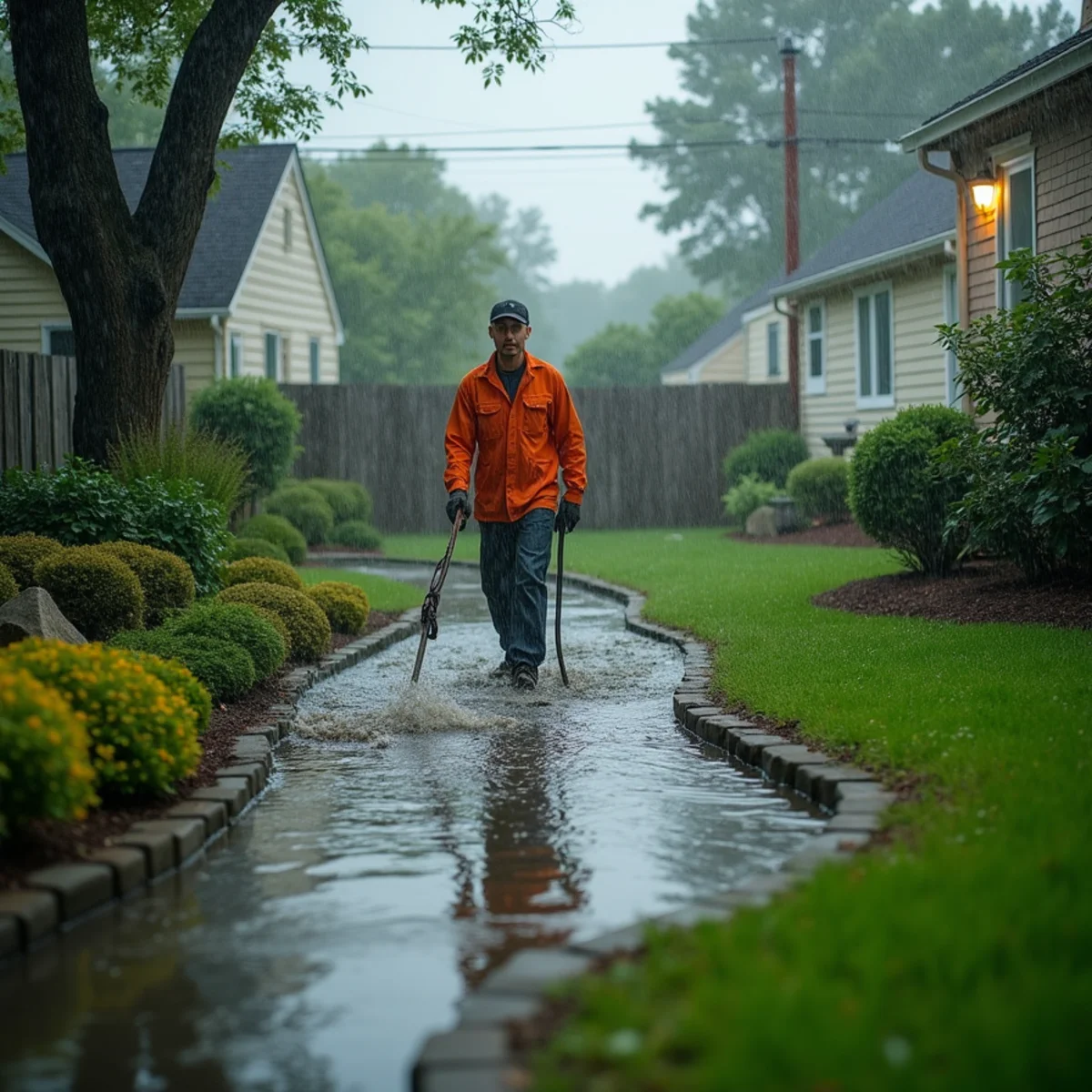
Central New Jersey averages around 46 inches of rain a year, and more of it now arrives in intense bursts that overwhelm yards in an afternoon. If you are watching water climb toward your foundation, back up against a walkout basement, or sheet across the lawn toward the house, you need to act fast and in the right order. Panic pushes people to do the wrong things first. This guide walks through what actually protects your home when the yard is flooding.
Understand where the water wants to go
Water follows grade and gravity, always seeking the lowest path. In a flooding event your job is to interrupt that path before it reaches the house and to give the water somewhere else to collect. Many Freehold Township and Manalapan Township lots sit on a mix of sandy loam and pockets of compacted clay, and when clay saturates it stops absorbing almost entirely, so surface water runs instead of soaking in. That is why a yard that drained fine for years can suddenly pond during a heavy storm.
Rapid action steps during the storm
- Clear your downspout outlets and gutters first. A single clogged downspout can dump hundreds of gallons directly against the foundation during a heavy rain.
- Extend downspouts away from the house with whatever you have, even temporary flexible tubing, aiming for at least several feet of clearance downhill.
- Build a quick diversion with sandbags, soil, or mulch to steer sheeting water around the house toward a lower part of the lot or the street.
- Move valuables and stored items off basement floors and away from any wall showing seepage.
- Keep sump pump discharge lines clear and check that the pump is running if you have one.
These are stopgaps. They buy time and reduce damage, but a yard that floods against the house in a normal heavy rain has an underlying drainage problem that stopgaps will not fix. That is where our Emergency Yard Drainage Mitigation service comes in during an active crisis, and where a permanent solution matters once the storm passes.
What emergency drainage crews do differently
When we respond to active flooding, we are not just moving water for the afternoon. We read the grade of the property, find the collection points, and cut temporary channels or set pumps to pull standing water away from the structure. We look for the failure that let the water reach the house, whether that is a reverse slope, a buried and collapsed drain line, or a low spot that has quietly deepened over years of settling. Stabilizing the emergency is step one; identifying the fix is step two.
After the water recedes: finding the real cause
Once the storm passes and the yard drains, resist the temptation to forget about it until next time. Flooding against a foundation almost never fixes itself, and each event does a little more damage to soil structure and to the foundation itself. Walk the lot and look honestly at the following.
- Grade: does the ground slope toward the house anywhere within the first several feet of the wall?
- Low spots: where did water actually collect, and how long did it sit after the rain stopped?
- Downspouts: are they dumping right at the foundation instead of carrying water well away?
- Soil: is the problem area heavy clay that stays soggy for days after every rain?
Permanent solutions that keep water off your foundation
For chronic problems, the durable answer is usually some combination of regrading and subsurface drainage. A properly built French drain intercepts water below the surface and carries it to a safe discharge point, and it is one of the most effective tools for a yard that keeps saturating in our clay-heavy soils. Our French Drain and Yard Water Solutions work is designed around how central New Jersey soil actually behaves, so the system keeps moving water long after a quick surface fix would have clogged or failed. Every system needs a legal, safe discharge point, and getting that right matters as much as the trench itself; NJDEP stormwater guidance also discourages simply pushing your runoff onto a neighbor, which a hasty homemade trench often does.
In many cases the best result comes from pairing subsurface drainage with corrected grading and improved downspout routing, so that surface water and groundwater both have a planned path away from the home. The right combination depends on your specific lot, the soil, and where the water is coming from, which is exactly what we evaluate before recommending anything.
Do not ignore the slow, quiet version
Not all foundation flooding is dramatic. A yard that stays spongy for days, a basement wall that weeps after every rain, or mulch beds that never fully dry are early warnings of the same underlying issue. Addressing drainage before it becomes an emergency is far cheaper than repairing foundation damage later, and it protects the plantings and hardscape you have invested in.
If your yard is flooding right now or keeps flooding every heavy rain, do not wait for the next storm to make it worse. The Blue Sky One LLC has served Monmouth County since 2020, we are licensed and insured, and we offer 24/7 emergency response. Call (323) 606-0255 for immediate drainage help or to schedule an evaluation that finds and fixes the source, backed by our satisfaction guarantee.
Ready to start? Talk to a local landscaping expert now.
(323) 606-0255Frequently Asked Questions
Soil compacts and settles over time, and heavier cloudburst-style storms are more common, so a lot that once absorbed rain now sheds it. Clay pockets that reach saturation stop absorbing almost entirely. Small grade changes from landscaping, patios, or nearby construction can also redirect water toward your home over the years.
A rough emergency channel can help during an active flood, but a permanent hand-dug trench usually clogs, collapses, or drains to nowhere useful. A properly designed system needs correct slope, the right stone and fabric, and a safe legal discharge point. Improper drainage can also push water onto a neighbor, creating disputes.
We run 24/7 emergency response across Monmouth County, including Freehold Township and Manalapan Township, and prioritize situations where water is threatening a foundation. Call as soon as you see water moving toward the house so we can help stabilize the emergency and then plan a lasting fix.
No. Depending on your lot, the best solution may combine a French drain with regrading, downspout extensions, a dry well, or a catch basin. We evaluate where the water originates and how your soil behaves before recommending anything, because the wrong single fix can move the problem instead of solving it.