
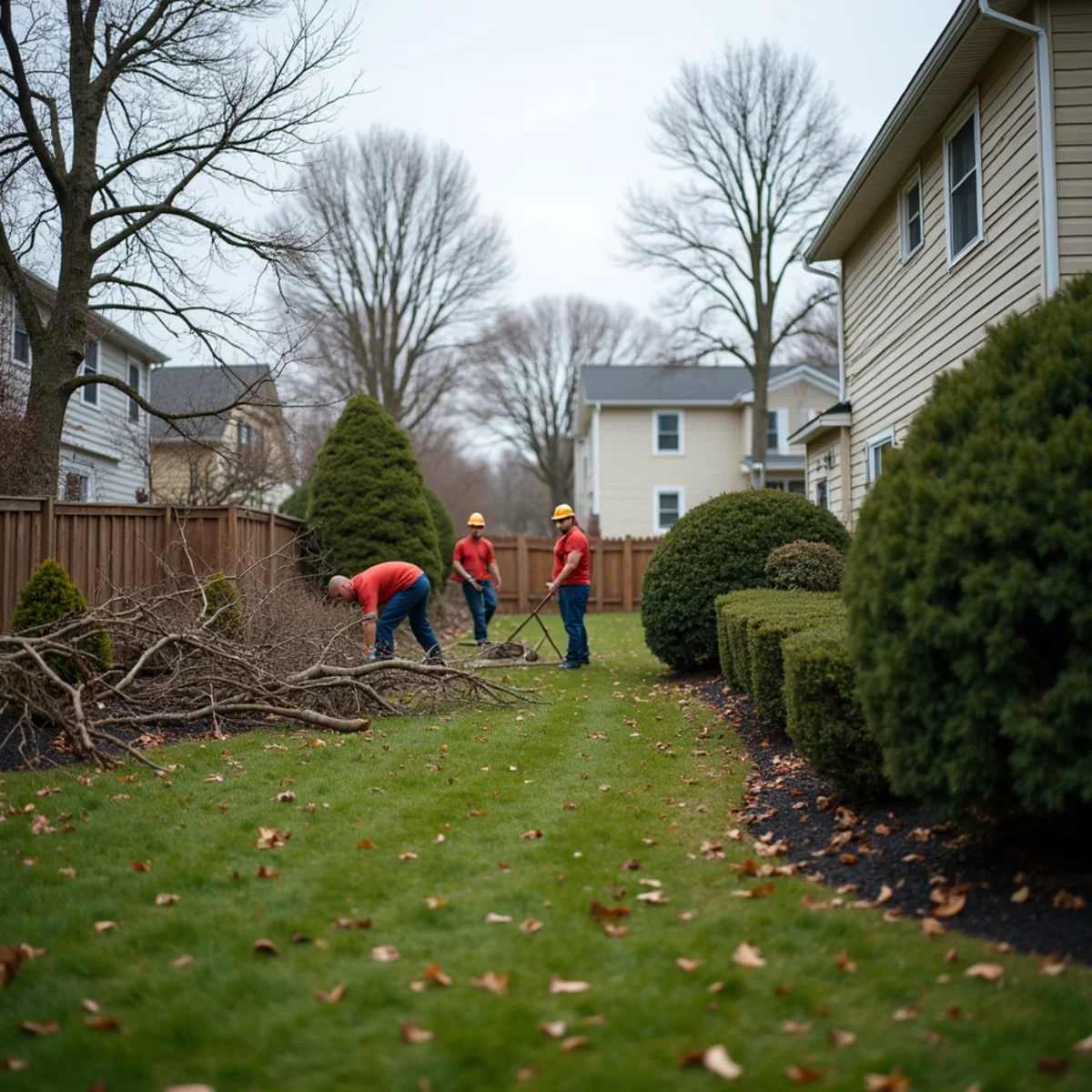
A nor'easter is a different animal than a summer thunderstorm. Instead of a violent half hour, you get sustained wind out of the northeast for many hours, often paired with driving rain and saturated ground. That combination is brutal on trees and landscapes, because soaked soil loses its grip on roots right when the wind is loading the canopy hardest. When you step outside after the system clears, the mess can be overwhelming. Here is how to handle it safely and in the right order.
Wait for the all-clear before you inspect
Nor'easters have a deceptive lull, and the wind often returns. Do not go out to survey damage until the system has genuinely passed. When you do, dress for it: sturdy boots, gloves, and eye protection. Wet debris is slick, downed limbs hide sharp ends, and the ground you are walking on may be undermined.
A safe damage-assessment walkthrough
Move slowly and methodically. The goal of your first walk is to catalog hazards and damage, not to start hauling. Keep your phone out for photos in case you need them for insurance.
- Check the perimeter of your home for anything resting against the structure, roof, or utility connections.
- Look up. Broken limbs hung in the canopy are the most dangerous hazard after high wind and can fall hours later.
- Examine standing trees for fresh leans, lifted soil at the base, and cracks where major limbs meet the trunk.
- Note fencing, sheds, and hardscape that shifted or broke, since these can have loose, sharp, or unstable pieces.
- Photograph everything and make a written list before you move a single branch.
Prioritize hazards over tidiness
It is natural to want the yard to look normal again, but scattered leaves and small twigs are the least of your worries. Focus your energy, and any professional help, on the things that can hurt someone or cause more damage: hung limbs, leaning trunks, blocked exits, and debris on the roof. Our Urgent Yard Hazard and Debris Removal crews are built for exactly this triage, clearing the dangerous material first so your property is safe to move around before we tackle the general cleanup.
The hidden danger of hung and cracked limbs
After sustained wind, canopies are full of partially broken branches that did not quite fall. Arborists call them widow-makers for good reason. They can hang for days and then drop in the next breeze onto whatever, or whoever, is below. A cracked union where a heavy limb attaches to the trunk is equally serious, because that limb may tear free entirely under its own weight. These are not DIY situations; they require someone trained to bring the material down under control.
Dealing with the debris field
A nor'easter scatters an enormous volume of material: shredded leaves, small branches, whole limbs, and sometimes entire trees. Sorting and removing it is more work than most homeowners expect, especially when the ground is saturated and heavy equipment would rut the lawn. A methodical cleanup separates what can be chipped, what must be hauled, and what can be composted, and it restores the beds, lawn, and hardscape that the storm buried or damaged.
- Large limbs and trunks are heavy and often under tension; leave these for crews with the right saws and rigging.
- Shredded leaf litter can smother a lawn if left in thick mats, so it needs raking out rather than mowing over.
- Broken fence sections and shifted pavers create trip and puncture hazards and should be secured early.
- Debris piled against the house or a downspout traps water and should be pulled back promptly.
When to call for professional storm cleanup
If your damage is limited to small twigs and a light scatter of leaves, a weekend of raking will handle it. But call for help when you see anything overhead, anything leaning, anything near a wire, or a volume of heavy material that would take days to move by hand. Our 24/7 Emergency Storm Damage Cleanup service covers Monmouth County around the clock, and reaching us early after a nor'easter means getting on the schedule before demand peaks. We assess the whole property, clear hazards in a controlled sequence, remove and process the debris, and put the landscape back in order.
Because we have worked storm cleanups across towns like Wall Township and Middletown Township since 2020, we know how these systems damage local landscapes and how to restore them efficiently. We are licensed, insured, and we stand behind the work.
Restoring the landscape after the hazards are gone
Once the dangerous material is down and hauled, the property still needs to be made whole. A nor'easter often leaves ruts where water ran, mulch and stone washed out of beds, and turf flattened or torn by falling limbs. Part of a complete cleanup is grading those ruts back, resetting displaced bed material, and checking that the storm did not create new low spots where water will now collect. Addressing these details promptly keeps a single storm from turning into a lingering drainage or erosion problem through the wet months that follow, since our region rarely gets a long dry stretch after a major coastal system.
After the next nor'easter, you do not have to face the mess alone or risk your safety on hazards that need trained hands. Call The Blue Sky One LLC at (323) 606-0255 for fast, thorough storm damage cleanup across Monmouth County, backed by our satisfaction guarantee.
Ready to start? Talk to a local landscaping expert now.
(323) 606-0255Frequently Asked Questions
They combine hours of sustained wind with heavy rain that saturates the soil. Wet ground loses its grip on root systems just as the wind is loading the canopy hardest, so even healthy-looking trees can uproot or shed major limbs. The long duration also fatigues weak unions that a short storm would not have broken.
No. Nor'easters have lulls, and the wind often returns with force. Wait until the system has fully passed before going out, and even then stay alert for hung limbs that can drop later. Cleaning up during active or returning wind is one of the most common ways people get hurt after these storms.
Small twigs and light leaf scatter can be raked and composted or bagged. Thick mats of shredded leaves should be removed so they do not smother the lawn, and heavy limbs are best left to crews with proper saws. For large volumes, professional cleanup separates chippable, haulable, and compostable material efficiently.
We provide 24/7 emergency response across Monmouth County and prioritize properties with active hazards like hung limbs or blocked exits. Demand surges right after a major system, so calling early improves your chances of same-day or next-day service in Wall Township, Middletown Township, and surrounding areas.