
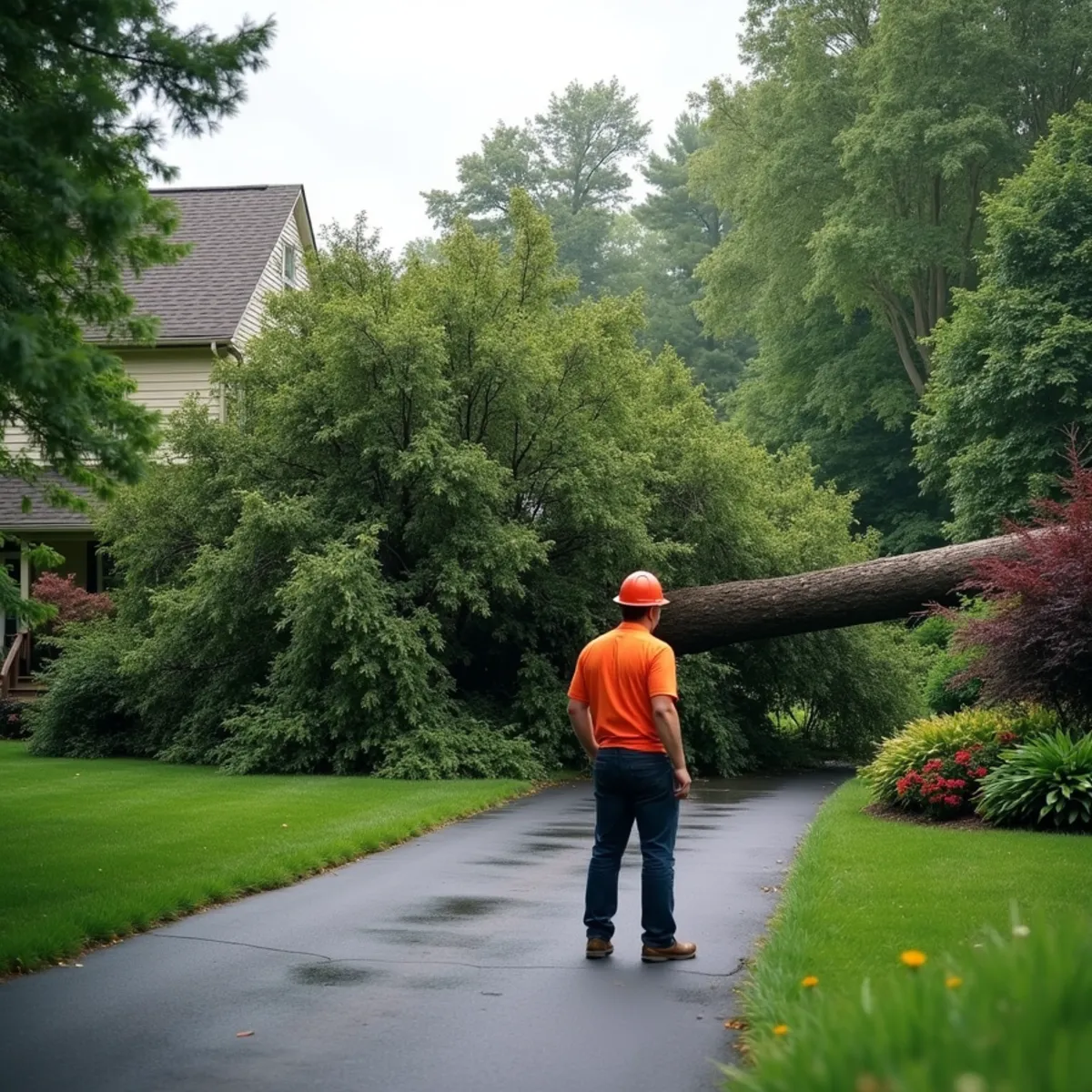
A mature oak or sweetgum coming down in a Monmouth County storm is loud, frightening, and disorienting. One minute the wind is howling; the next there is a trunk lying across your driveway, a limb through the garage roof, or a canopy tangled in the power lines. What you do in the first hour matters for your safety, your insurance claim, and how quickly your yard gets back to normal. This is the practical sequence our crews walk homeowners through every storm season.
First, treat every fallen tree as a live hazard
The single most important rule after a tree falls is to assume danger until proven otherwise. Downed trunks routinely trap tension in bent limbs and root plates, and a canopy that looks settled can shift violently the moment weight is removed. Keep everyone, including pets, well back from the tree and from anything it is leaning against.
- Never touch a tree that is contacting or near a power line, cable, or service drop. Treat every wire as energized and call your utility and 911.
- Stay clear of a partially uprooted tree; the root ball can snap upright without warning.
- Do not walk under limbs that are hung up in other branches, sometimes called widow-makers, because they drop without notice.
- Watch for a lifted or cracked foundation, gas smell, or damaged meter, and evacuate if you suspect a gas leak.
Document everything before anything moves
Once you have confirmed nobody is hurt and the immediate area is safe to stand in, pull out your phone. Insurance adjusters want to see the damage in its original state, and thorough documentation is the difference between a smooth claim and a drawn-out dispute.
- Photograph the whole scene from several angles, then move in for close-ups of every point of contact with your house, fence, vehicle, or shed.
- Capture the root plate and the base of the trunk, which help establish that the tree failed rather than being cut.
- Record the date and time, and note the storm if there was a named nor'easter or severe thunderstorm warning.
- Make a written list of visibly damaged property so nothing is forgotten when you file.
Call your insurer promptly to open a claim, but do not wait on the adjuster to make your property safe. Most policies allow reasonable emergency measures, such as tarping a roof or clearing a blocked exit, as long as you keep receipts and photos.
Make the property safe, not perfect
The goal in the first day is stabilization, not a finished cleanup. If a limb punctured the roof, get a tarp over it to stop water from entering. If the trunk blocks your only driveway or a walkway you need, focus on opening a safe path rather than hauling the entire tree at once. This is exactly the kind of work our Emergency Fallen Tree and Limb Removal crews prioritize when we arrive: cut the tree back from the structure, relieve the dangerous tension, and secure the site so the property is livable again.
Why chainsaw heroics go wrong
We understand the urge to grab a saw and start cutting, especially when a tree is blocking your day. But storm-felled trees behave nothing like a standing tree you are pruning. Compression and tension are hidden inside the trunk, and a bar can pinch or a section can kick back the instant you complete a cut. Every storm season, emergency rooms across New Jersey see avoidable chainsaw injuries. Small, ground-level branches you can safely reach are one thing; a loaded trunk, anything overhead, or anything near a wire should wait for equipment and trained hands.
What professional storm cleanup actually involves
When our team responds to a fallen tree in Freehold Borough or the surrounding towns, we work through a predictable process that protects your property while we clear it. First we assess the load path of the tree and identify where it is under tension. Then we section the canopy and limbs methodically, relieving pressure in a controlled order so nothing swings or rolls. We remove debris, grind or haul the trunk depending on your preference, and rake out the smaller material that the storm scattered. For homeowners who want the yard fully restored, our 24/7 Emergency Storm Damage Cleanup service also handles the downstream mess, including flattened beds, broken fencing, and the ruts that heavy equipment can leave behind.
Because we serve Monmouth County around the clock during storm season, we can often reach a property the same day a tree comes down. That speed matters. A tree resting on a roof continues to work at the shingles and framing every hour it stays there, and standing water pooling around an uprooted plate can undermine soil near your foundation.
Protect the rest of your landscape
After the emergency passes, take a slow walk of your yard. A storm violent enough to drop one tree often leaves others compromised. Look for fresh leans, soil heaving at the base of nearby trunks, and cracks in major limbs. Flag anything questionable so it can be evaluated before the next system rolls through, since central New Jersey rarely goes a season without another nor'easter or line of thunderstorms.
When a tree comes down on your property, you do not have to sort it out alone. The Blue Sky One LLC has served Monmouth County since 2020, we are licensed and insured, and our emergency line runs 24/7. Call (323) 606-0255 and we will get a crew moving to make your property safe and clear again, backed by our satisfaction guarantee.
Ready to start? Talk to a local landscaping expert now.
(323) 606-0255Frequently Asked Questions
Do not remove the whole tree first, but you are allowed to take reasonable emergency steps such as tarping a roof or clearing a blocked exit. Photograph everything before you touch it, keep receipts for any emergency work, and let your insurer know what you did and why so your claim stays clean.
During active storm season we run 24/7 emergency response across Monmouth County and can frequently reach Freehold Borough and nearby towns the same day. Call as early as you can, because demand spikes after a major nor'easter and same-day slots fill quickly once wind subsides.
It depends on your policy and what the tree hit. Coverage often applies when a tree strikes an insured structure, and limits and deductibles vary widely. Your insurer makes the final coverage decision, so open a claim quickly and keep all photos, notes, and receipts to support it.
Treat it as an immediate emergency. Keep everyone far back, assume the line is live, and call 911 and your utility, JCP&L in most of Monmouth County. Do not attempt any cutting near the wire. A tree touching a line must be cleared by the utility or by crews coordinating with them.